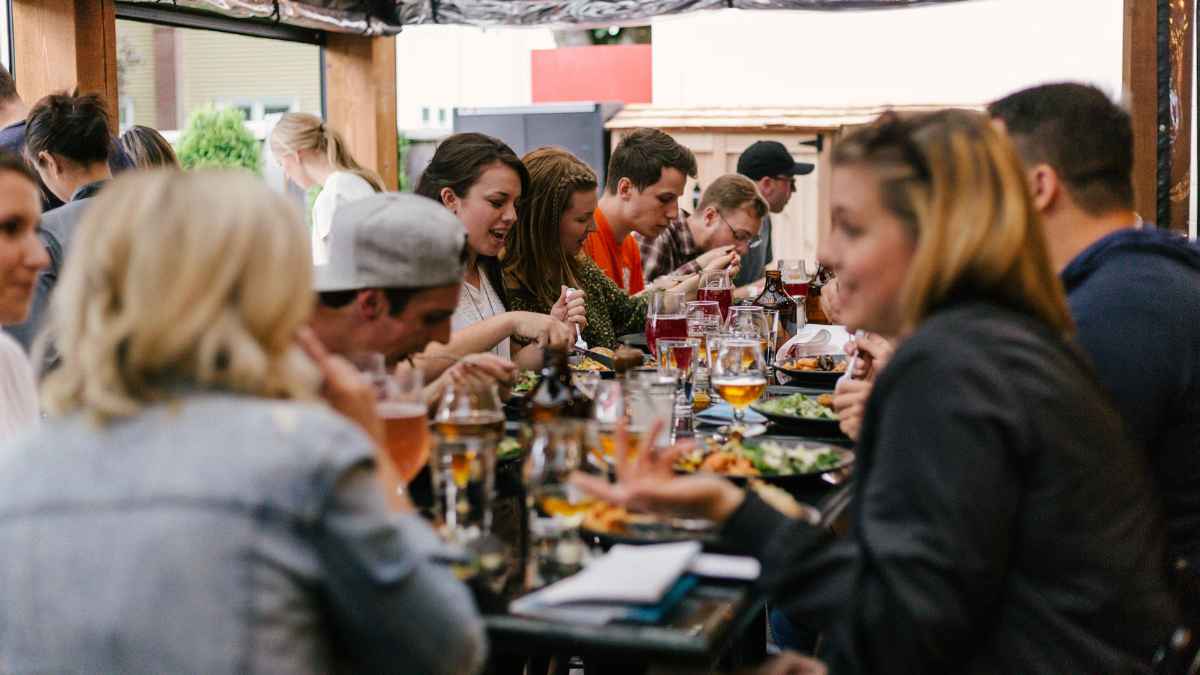

If you run a full-service restaurant and you're still closing out tables the old way (drop the check, wait, pick up the card, walk to the POS, run it, walk back), you already know the problem. That process takes 7–12 minutes per table on a good night. During a Friday rush, those minutes compound into longer wait times at the door, frustrated guests, and servers who can't flip tables fast enough to make their money.
Pay-at-table technology fixes this. But the category has gotten crowded, and the solutions aren't interchangeable. Some require new hardware. Some only work with specific POS systems. Some handle individual payments fine but fall apart when a group of six tries to split a $180 check by item.
This guide breaks down the six main approaches to pay-at-table in 2026, with honest assessments of who each one is built for. We run one of these companies (TabSettle), and we'll be upfront about that. This post exists because we kept hearing from restaurant owners that they couldn't find a straightforward comparison anywhere.
How we evaluated these solutions
Every solution below was assessed on five criteria that matter most to restaurant operators:
- Setup complexity: How much changes on day one? New hardware, POS reconfiguration, staff retraining?
- Bill-splitting capability: Can groups split by item, not just evenly? Can shared plates be divided?
- POS integration: Does it sync with your existing system, or create a parallel workflow?
- Guest experience: Does the diner need to download an app, create an account, or figure out a confusing interface?
- Cost structure: Hardware costs, monthly fees, per-transaction fees, or some combination?
The six main options
1. Sunday — QR code payments at scale
High-volume restaurants that want fast individual checkout and Google review generation.
Sunday is the biggest name in QR-based restaurant payments right now. Founded in 2021 by the team behind Big Mamma Group (a European restaurant operator), Sunday has raised over $145 million in funding and now works with roughly 3,500 restaurants across the US, France, and the UK. They process more than $4 billion in payments annually.
The core product is straightforward: a QR code on the table lets diners view their bill, add a tip, pay, and leave a Google review, all from their phone. Sunday reports that the entire flow takes about 10 seconds per diner, and 85% of paying customers leave a review through their system.
Strengths: Sunday's scale is its biggest advantage. With 3,500 restaurant partners, including groups like Lettuce Entertain You and Tao Group, there's real operational proof behind their claims. Their Google review pipeline is genuinely powerful for restaurants that need to build online reputation.
Limitations: Sunday is primarily built for individual checkout. It handles basic bill splitting (even splits, percentage-based), but it's not designed for the messy reality of group dining where four people need to claim specific items from a shared check in real time. Sunday also doesn't publicly list pricing.
2. TabSettle — Real-time collaborative bill splitting
Full-service restaurants, from independent neighborhood spots to small regional groups, that want to eliminate the bill-splitting bottleneck and give every diner a fast, self-service checkout.
Full disclosure: this is us. TabSettle is a QR-based payment platform, but the core differentiator is what happens after the scan. Every diner at the table joins the same live session — like a shared Google Doc for the restaurant check. Everyone sees the itemized bill on their own phone, simultaneously. Each person taps to claim the items they ordered. Shared plates can be divided between specific people. Tax and tip calculate proportionally based on what each person claimed. Then everyone pays from their own device.
The key difference from other QR-based solutions: this isn't sequential (one person pays, then the next). It's simultaneous. All four or six or eight people at the table are in the same session at the same time, seeing claims update live. The whole process takes about 60 seconds for a table. And for parties of one or two who don't need to split, the same QR code works as a straightforward scan-and-pay checkout.
TabSettle integrates with Square and Clover via direct API connections (multi-tenant OAuth), with Toast and other POS systems supported through OCR and custom API fallback. Setup requires QR codes on tables (we provide these) and a POS connection. No new hardware, no app download for diners.
Strengths: Handles both quick individual checkout and full collaborative splitting through the same QR code. Real-time session means the table handles their own split without server involvement. SMS and email receipts go automatically to every diner. Flat monthly subscription. Free 30-day pilot with on-site setup.
Limitations: TabSettle is an early-stage company. We're focused on independent restaurants and small regional groups (1–10 locations) in the OC/LA market first. The Toast integration uses OCR fallback rather than a formal API partnership — a direct Toast integration is on the roadmap.
3. Ziosk — Tabletop tablets
Large casual dining chains (100+ locations) that want a full guest engagement platform, not just payments.
Ziosk pioneered the tabletop tablet category. If you've eaten at Chili's, Olive Garden, or Outback Steakhouse, you've probably used one. They operate over 220,000 tablets across the US and have processed more than $11.8 billion in transactions.
The Ziosk tablet sits on every table and lets guests view their bill, split the check, pay with a card or mobile wallet, play games, take surveys, and enroll in loyalty programs. About 94% of Chili's guests choose to pay through the tablet.
Strengths: Most proven solution at enterprise scale. Card-present transactions mean lower processing fees than QR-code-based solutions. Deep data and analytics capabilities.
Limitations: Requires dedicated hardware on every table — significant upfront investment. The economics work for 100+ location chains, but for a 3-location independent restaurant group, the cost is hard to justify. The tablets also feel out of place in upscale or trendy dining environments.
4. Toast Mobile Order & Pay — Built into the Toast ecosystem
Restaurants already on Toast POS that want QR-based ordering and payment without adding another vendor.
Toast's Mobile Order & Pay lets guests scan a QR code to view the menu, place orders, and pay. It's included at no extra monthly cost with Toast POS plans. Toast reports a 10% increase in processing volume and 9% higher check sizes.
Strengths: If you're already on Toast, this is the path of least resistance. No new vendor relationship, no extra monthly fee. Everything flows directly into your existing Toast reporting.
Limitations: Only works if you're on Toast. While the group ordering feature lets multiple people add items, the bill-splitting experience is limited — no item-level claiming. QR payments process as card-not-present with higher interchange fees. You're locked into Toast's payment processing.
5. Up 'n go — QR code payments with POS integration
Full-service restaurants that want QR-based checkout with strong POS compatibility (especially NCR Aloha).
Up 'n go takes a similar approach to Sunday but differentiates on POS integration depth. They integrate directly with NCR Aloha, making them a strong fit for the many full-service restaurants running that system. They also offer a "Text-the-Check" feature for to-go and curbside.
Strengths: Deep NCR Aloha integration. Text-the-Check fills a gap most QR-only solutions miss. Solid guest feedback tools (Google, Yelp, TripAdvisor review prompts).
Limitations: Built primarily for individual checkout, not collaborative splitting. Strongest on NCR Aloha — if you're on Square, Clover, or Toast, other solutions may fit better.
6. Handheld POS terminals — The traditional approach
Restaurants that want faster card processing without changing the guest experience at all.
This is the non-software approach: equip servers with wireless payment terminals (Square Terminal, Clover Flex, Toast Go, PAX devices) so they can process card and tap-to-pay transactions at the table instead of walking to a stationary POS.
Strengths: Zero learning curve for guests. Card-present processing means the lowest possible interchange fees. No risk of adoption issues.
Limitations: Doesn't change the fundamental workflow. For a party of six splitting a check, the server is still standing at the table running six separate transactions. Hardware cost per device, and you need enough for peak service.
Quick comparison
| Sunday | TabSettle | Ziosk | Toast Order & Pay | Up 'n go | Handheld Terminals | |
|---|---|---|---|---|---|---|
| Type | QR code | QR code | Tablet on table | QR code | QR code | Server-carried device |
| App download? | No | No | No (tablet) | No | No | No |
| New hardware? | QR codes only | QR codes only | Tablets every table | QR codes only | QR codes only | Wireless terminals |
| Item-level splitting? | Limited | Yes — real-time | Basic | Limited | Limited | Manual via POS |
| Multi-diner session? | No | Yes | No | Partial | No | No |
| Auto receipts? | Varies | SMS & email | Via tablet | Via Toast | Varies | Paper / POS |
| POS integrations | Most major | Square, Clover, Toast | Aloha, MICROS | Toast only | NCR Aloha | Native to POS |
| Card-present? | No (CNP) | No (CNP) | Yes | No (CNP) | No (CNP) | Yes |
| Best fit | High-volume, individual checkout | Full-service independents & small groups | Enterprise chains (100+) | Toast restaurants | Aloha restaurants | Any restaurant |
How to choose the right solution
The right answer depends on what problem you're actually solving.
"I need faster individual checkout and more Google reviews."
Sunday is the strongest option here. Their review generation pipeline is unmatched, and their scale means the product is battle-tested.
"I want faster checkout for every table and real bill splitting that actually works for groups."
TabSettle. It handles quick individual payments and full collaborative item-level splitting through the same QR code, with automatic SMS and email receipts for every diner.
"I run a large chain and want a full guest engagement platform."
Ziosk. The tablets do far more than payments: surveys, loyalty, games, analytics. But you need the scale to justify the hardware investment.
"I'm already on Toast and don't want another vendor."
Toast Mobile Order & Pay. It's free with your Toast plan and natively integrated.
"I run an Aloha POS and want QR payments."
Up 'n go has the deepest Aloha integration in the category.
"I don't want to change the guest experience at all."
Handheld terminals. Your servers carry the payment to the table. Nothing new to learn.
Frequently asked questions
Do diners need to download an app to use pay-at-table?
With QR-based solutions (Sunday, Up 'n go, TabSettle, Toast Mobile Order & Pay), no. Guests scan with their phone camera, which opens a web page in their browser. No app download, no account creation. Ziosk uses a restaurant-owned tablet, so there's nothing for the guest to install either. Handheld terminals are server-operated.
Will pay-at-table technology reduce my servers' tips?
The data across multiple providers consistently shows tips increase, not decrease. Ziosk reports a 20% increase in tips. Sunday reports a 10% average increase. Digital tip prompts with suggested percentages tend to nudge tips higher than pen-and-paper receipts, and faster table turns mean servers can handle more covers per shift.
What about payment processing fees?
This varies more than you'd expect across solutions. The main distinction is between card-present (CP) and card-not-present (CNP) transactions. Tablet-based systems like Ziosk and handheld POS terminals process card-present, which typically carries lower interchange fees. QR-based solutions generally process as card-not-present since the card isn't physically read by a terminal.
That said, the actual fee structure depends on the provider's payment infrastructure. TabSettle, for example, processes through Stripe Connect at a flat 2.9% + $0.30 per transaction with no additional CNP surcharge on top. Other QR-based providers may have different fee structures. Ask each provider for their specific fee breakdown before comparing.
How long does setup take?
Handheld terminals can be set up in a day. QR-based solutions (Sunday, Up 'n go, TabSettle) typically take a few days to a week depending on POS integration. Sunday reports about 7 days for compatible POS systems. TabSettle includes two on-site visits during the pilot: initial setup and a live-service monitoring session. Ziosk, with physical tablets on every table, has the longest setup timeline.
Can I use multiple solutions at the same time?
Technically yes, but practically it gets complicated. Running QR codes alongside handheld terminals is common — give guests the option to scan or pay the traditional way. Running two QR-based solutions simultaneously would create confusion. Most restaurants pick one digital payment approach and standardize.
The bottom line
Every full-service restaurant should have pay-at-table in 2026. Consumers expect it. It makes life easier for staff and owners. The only real question is which approach fits your specific operation.
Start with your actual pain point. Is it checkout speed? Guest reviews? Bill splitting for groups? Server efficiency? The answer narrows the field quickly.
And if you want to test before committing, most providers (including us) offer pilots or trials. There's no reason to sign a long-term contract before you've seen how your guests actually interact with the technology during a real dinner rush.
We wrote this guide because we think restaurant owners deserve a clear-eyed comparison, not a sales pitch disguised as a blog post. If you want to see how collaborative splitting works at your restaurant, start a free 30-day pilot.